The Natural Curiosity Project
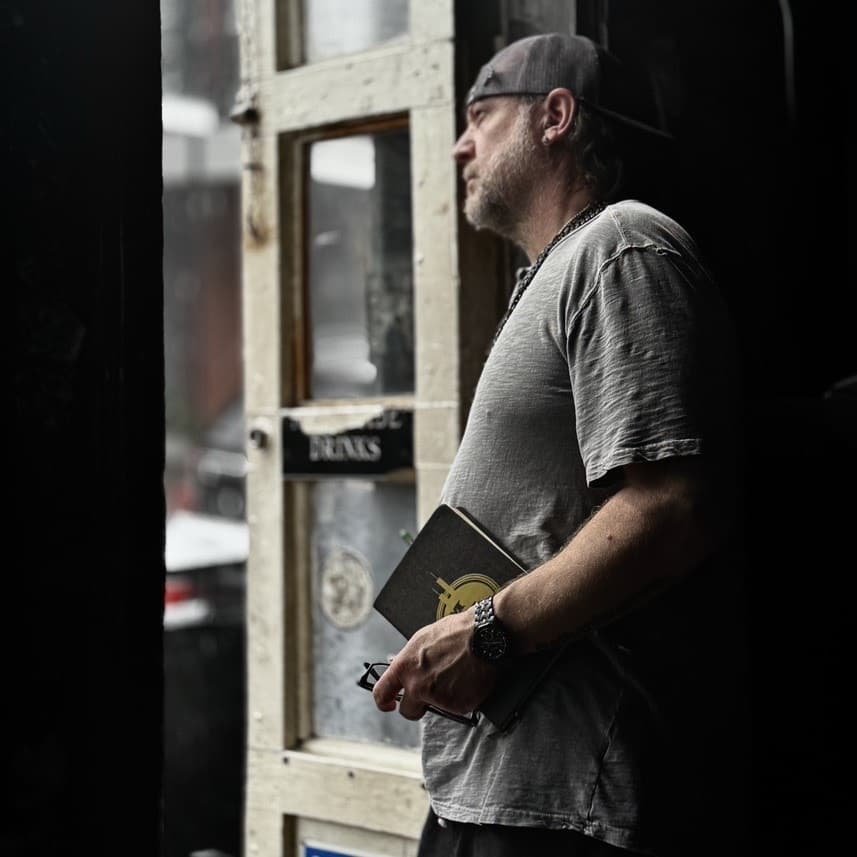
I photograph, record, and write about the natural world. I see, I listen, I write. I fundamentally believe that curiosity can save the world—so I publish stories to make people curious. Ultimately, curiosity leads to discovery, discovery leads to knowledge, knowledge leads to insight, and insight leads to understanding. Please enjoy!
Latest Episodes
Episode 337—The Great Library of Alexandria
For some bizarre reason, the Great Lbrary of Alexandria is not on the list of the Great WOnders of the Ancient World. But after you listen to this, you may wonder why.
Episode 336-Farmer Mike's Memory Barn
Long-time listeners may remember my interview with Farmer Mike Isham, my friend and neighbor, about how maple syrup is made. We did the interview inside the sugarhouse while the boiler was going. Well, Mike has several barns on his property, and one of them has an unused loft that he turned into a farming museum of sorts, with most of the displays being actual tools and implements that his father, grandfather, and great-grandfather used on the Isham farm. But Mike is also an author and a terrifi…
Episode 335-Halloween
Just some intriguing thoughts about Halloween.
Episode 334-Caputo and Franklin-A Conversation
Philip Caputo wrote more than a dozen books, including ‘Notes from the Longest Road’ about a trip he took with his wife that started in Key West, Florida, and ended in Point Barrow, Alaska, towing an Airstream camper behind their pickup. The goal? Answer one question: After nearly 250 years, a Civil War, countless other conflicts, racial divides, and political turmoil, what is it that holds this country together, still governed by the same Constitution that the nation’s founders adopted in 1789?…
Episode 333-Peter Sugarman's Dolphins
60 years ago, Peter Sugarman began a project that would consume his entire life: how could he develop a linguistic bridge between humans and another sentient species, specifically dolphins? In this interview, Peter walks us through the research, his ups and downs, and the remarkable aUI language that he believes will serve as that bridge.
Episode 332-Jurassic AI
The world is currently gaga over AI—artificial intelligence. It is a remarkable technology, with the potential to create remarkable opportunities in many fields in the coming years. It is, however, enormously powerful, and in my opinion, requires rigorous oversight and strong regulation. As I was thinking about the topic—something I find myself doing a lot—I began to think about the movie Jurassic Park, especially three quotes uttered by Ian Malcolm, the Chaos Theorist played by the inimitable J…
Episode 331-Talk Dirty to Me Part 2
This is part two of my series on soil ecosystem health. In this episode I’m in the Mad River Valley in central Vermont with ecologist Curt Lindberg, listening to the sounds of the soil in areas with and without invasive species present. The results are fascinating.
Episode 330-A Golden Story
In 1942, Simon & Schuster, in partnership with Western Publishing, released a new book series for kids. The initial print run of one-and-a-half million books sold out in five months, including one of the initial twelve titles that became and continues to be the number one bestselling children’s book of all time in the United States. In this episode, we talk about that book series, and about the magic of books and reading.
Episode 329-Musings on Bernd Heinrich
I just finished reading my 83rd book of the year, Bernd Heinrich’s “The Common Uncommon.” Bernd is the author of many books about the natural world, including Mind of the Raven, Winter World, The Geese at Beaver Bog, A Year in the Maine Woods, and many, many others. Oh—he’s also a world record holder for ultra-marathon running: In 1983, he set an American record for a 24-hour run of 156 miles, 1388 yards in a race in Maine. A year later, he set an American record for running 100 miles in a littl…
Episode 328-Ages of the Anthropocene
A lot has been written about the ages of human existence, beginning with the Stone and Iron and Bronze Ages, then going all the way through to the Information Age. But I believe that there are actually more identifiable periods that aren’t talked about—13 of them in fact. In this episode, I’m going to talk about them and why I think they’re important. I’m also going to discuss how they relate to one another and what their contributions and liabilities have been.
Episode 327-Talk Dirty to Me, Part 1
It’s all around us. It lies beneath our feet, it gets embedded in our clothing and skin, and the air is filled with it. It makes us sneeze. Great clouds of the stuff are lifted from the African Sahara by harmattans and sciroccos and carried high into the atmosphere, where great westward-flowing aerial rivers carry it across the Atlantic to South America, where it falls like rain and feeds the equatorial rainforest. Weird, right? I’m talking, of course, about soil, or as most of us call it, dirt.…
Episode 326-Thoughts on Log From the Sea of Cortez
In 1940, author John Steinbeck and his good friend and marine biologist Ed Ricketts set off on a six-week collecting expedition in the Sea of Cortez. The book that resulted from that journey isn't well known, but it is wonderful. Here I offer a few thoughts about the book and their journey.
Episode 325-If You Want Something Different
Thoughts on America’s future on her 250th birthday.
Episode 324-Jennifer Comeau and Milo the Green Mussel
You've heard me refer more than once to my friend Liz McKenzie, the Alaska-based filmmaker who made the documentary, "The Singing Planet." Well, a few months ago, Liz was visiting family in northern Florida, and while she was there, we had a chat over Zoom about a handful or projects we're working on together. But while we were talking, she interrupted herself and told me that she wanted to introduce me to someone whom she had met while she was in Florida. "A very interesting person," she told m…
Episode 323-Life's Battery
Contrary to popular belief, life may very well not have begun on the sunlit surface of the planet--but rather in the deepest part of the deepest oceans. In his new book, "The Dark Frontier," marine geobiologist Jeffrey Marlow explains why.
I Otter be in the Water
When I was a commercial diver in California, I often found myself surrounded by great swarms of marine mammals--seals and sea lions, mostly. But every once in a while we were rewarded by a sea otter, the most iconic of all marine mammals. Hunted almost to extinction (their numbers went from 300,000 to 50, then bounced back), they are a charismatic keystone species that hold a special place in my heart.
Episode 321-A Climb to Remember
It was an assignment to photograph the 50th anniversary of the San Francisco Bay Bridge from atop one of the towers. Who knew they didn't have an elevator?
Episode 320-Food Names
Ever wonder why they call the company Starbucks?
Episode 319-Holly Hughes, Publisher and Much More
Poet, fishing boat captain, publisher--what a great conversation!
Episode 318-The Greatest Sentence Ever Written
In this small book that celebrates the second line in the American Declaration of Independence--the line that begins, "We hold these truths to be self-evident..." we discover the brilliance of the nation's founders.